

Thank you for purchasing some of my
SOURDOUGH
STARTER
Lovingly named “Bread Pitt” because he makes
a sexy loaf of bread.
You now have 30 grams of active, happy starter that is ready to bake with whenever you are. Below are my instructions for feeding and suggested place to start for a recipe. Enjoy!
If you are not baking right away…
You can keep the starter in the fridge and will only need to feed it about once a month to maintain it. After a monthly feeding, you can put it directly back in the fridge once it’s fed and it will grow very slowly at the lower temperature.
Maintenance feeding ratio should be a 1:1:1, for example:
- 20 grams of starter
- 20 grams of water
- 20 grams of flour
If you want to research the world of sourdough and gain an in-depth understanding of a starter and how to maintain it, I highly recommend The Perfect Loaf as he has a very detailed sourdough starter guide!
-
Keep It Happy
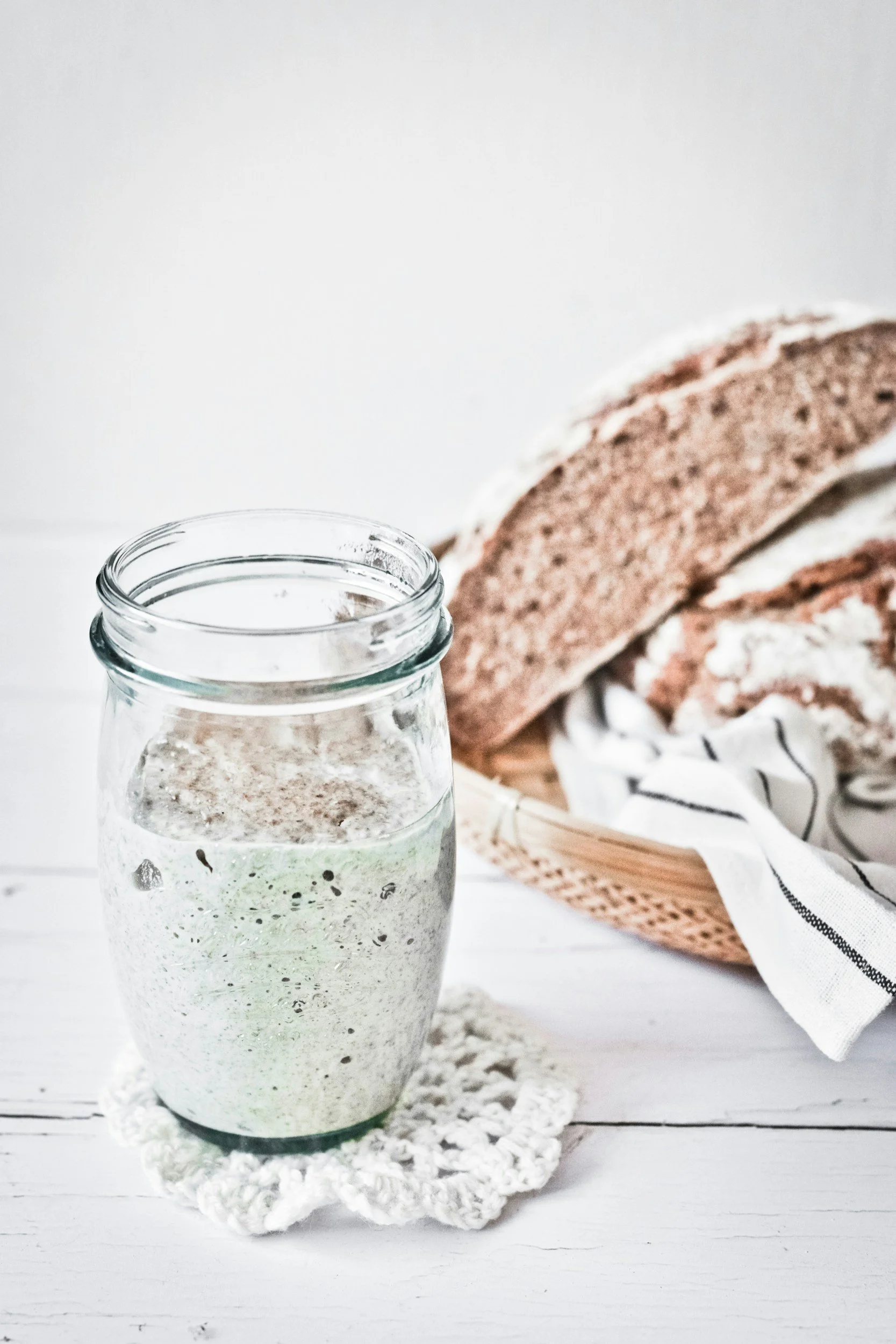
- You can and should keep the starter in the fridge until ready to feed. This is helpful to give you time to research what comes next in your sourdough journey.
- When you’re ready, you can move on to the next steps.
- This is a very established starter and will be OK to rest in the fridge for up to 6 months.
-

Feed It!
- Remove starter from fridge for a few hours so that it comes to room temperature.
- To a mason jar, add equal parts of room temperature starter, room temperature filtered water, and unbleached all purpose flour and mix until combined and there are no dry pocked of flour.
- If you are feeding the starter to bake with, use your recipe to determine how much to feed (ex: recipe calls for 200g starter, so you would mix 67g starter, 67g water & 67g flour to equal 200g combined).
- Once mixed, loosely cover with the mason jar lid (do not seal), and let it sit at room temperature to grow.
- Make sure to mark the mixture level with a rubber band or dry erase marker so you can see how much it grows!
-
Watch it grow!
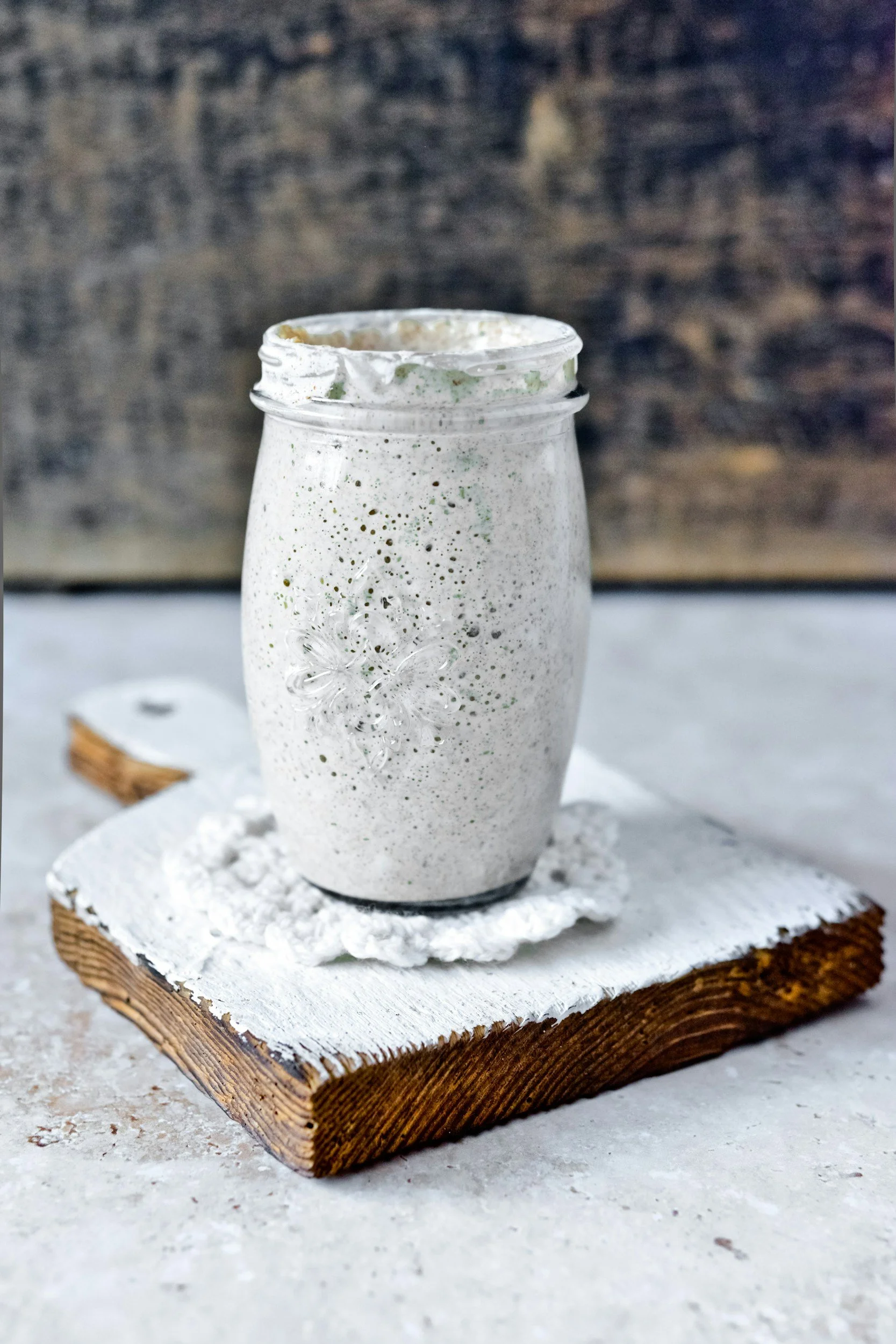
- The starter should double (or triple! or quadruple!) in size within 4 to 6 hours, depending on the temperature of your home.
- The starter is at peak growth (aka “ripe starter”) when the surface is no longer domed and smooth, but has leveled off and has bubbles along the surface.
- Once the starter is at peak, it is ready to bake with! Or, if you are not ready to bake and this was just a maintenance feeding, it can go back into the fridge where it will go dormant/go to sleep until the next time you feed it.
-
Advanced Tips
- Starter likes to be at room temperature, so I don’t put mine in the fridge. This is done by feeding it twice a day at a higher ration (1:10:10). I will mix 2g starter, 20g water & 20g flour together in the morning, let it rise and come to peak (which takes about 8-12 hours at this higher ratio), and then repeat the same process again in the evening.
-
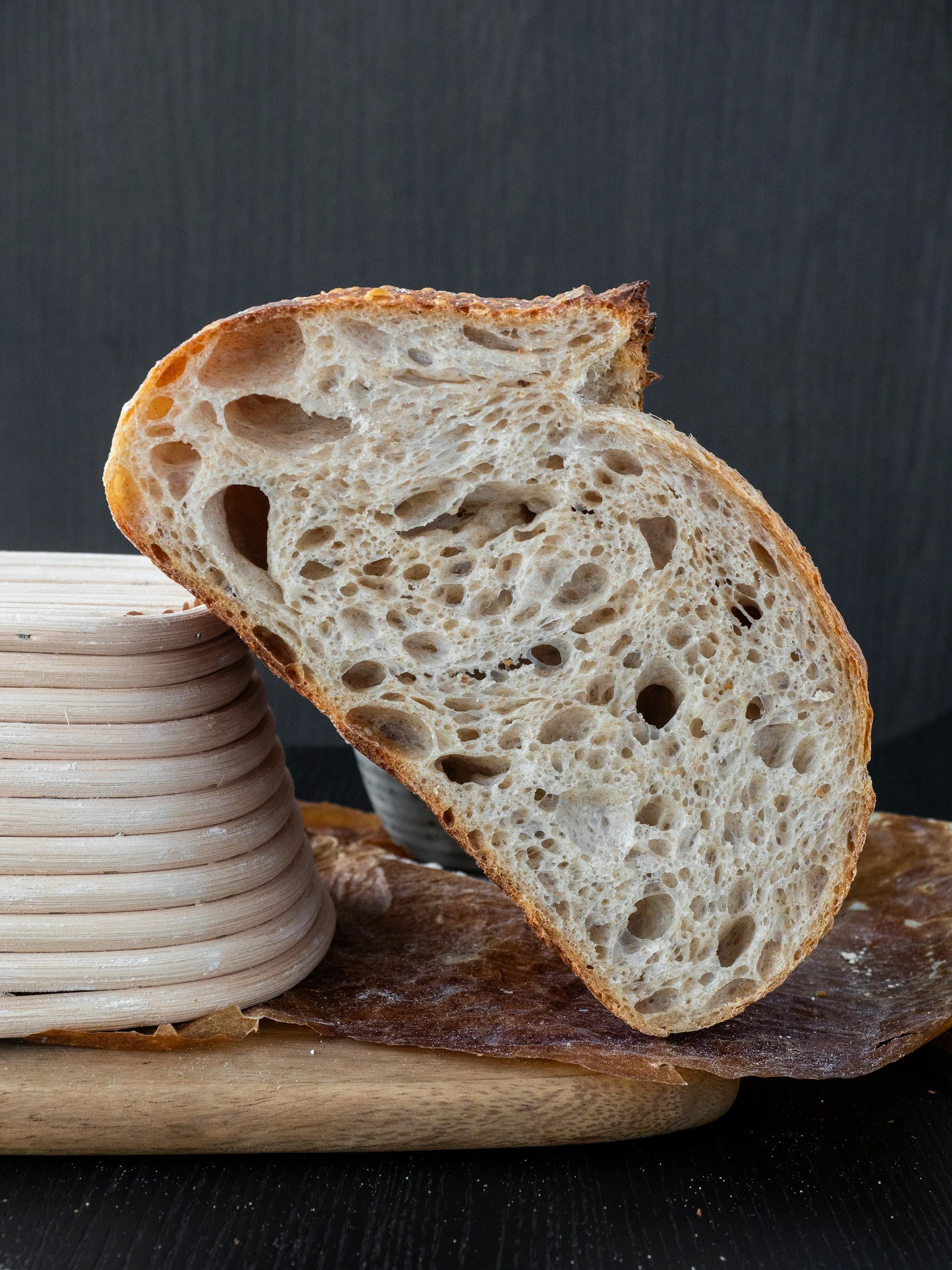
My Recipe & Process
Makes two loaves of classic artisan sourdough bread.
Ingredients:
- 740g water, 150g ripe starter, 200g Dry Storage Rouge de Bordeaux whole wheat flour, 300g Kirkland unbleached all purpose flour, 500g King Arthur unbleached bread flour, 22g kosher salt.
- Add water (reserve 20g to add later) and starter to a bowl. Mix to combine and create a milky liquid.
- Add flours. Mix to combine, making sure there are as few dry pockets of flour as you can get. This will create a very shaggy dough. Cover and rest in a warm place (I like the oven with oven light on) for 1 hour.
- After 1 hour, add in reserved 20g water and salt. To combine, make a pinching/grabbing/kneading motion with your hands for about 3-5 minutes. The salt and water will take a while to combine with the dough, but it will eventually so keep going! Once the dough comes together a bit, you can perform slap and folds to build gluten and bring the dough together more.
- Once you have a combined and cohesive dough, rest for 30 minutes.
-